Public preview · No login required
Every Sensory Setup feature, as readable text.
This page mirrors the full site content — every environment, every blueprint, the brain science, the shopping lists, and the 15-minute build checklists — rendered server-side so crawlers, AI agents, and screen readers can read it without running JavaScript.
What's inside the suite
Home
Landing page with the hero and a single Browse Setups button, category tiles, one featured setup, and the newsletter signup.
/Setups
Every setup across every environment, filterable by environment, energy tier and sensory sensitivity.
/setupsJournals
Long-form field notes and essays on neuro-inclusive living and executive function.
/journalsResources
Vetted physical products, digital tools, apps, and templates for ADHD adults.
/resources
Quick wins
- Put your meds next to your toothbrush. That’s it. That’s the system.
- One lamp on, overheads off — your nervous system will exhale.
- Set a 7-minute timer before any ‘small’ task. It’s never small.
- Body-double on a silent video call while you do laundry.
- Pre-fill tomorrow’s water bottle tonight. Future-you cries with relief.
Environments
Every blueprint, in full
Each blueprint below includes the summary, brain science, full shopping list with prices, and the 15-minute build checklist — the same content that lives at /setup/<slug>.
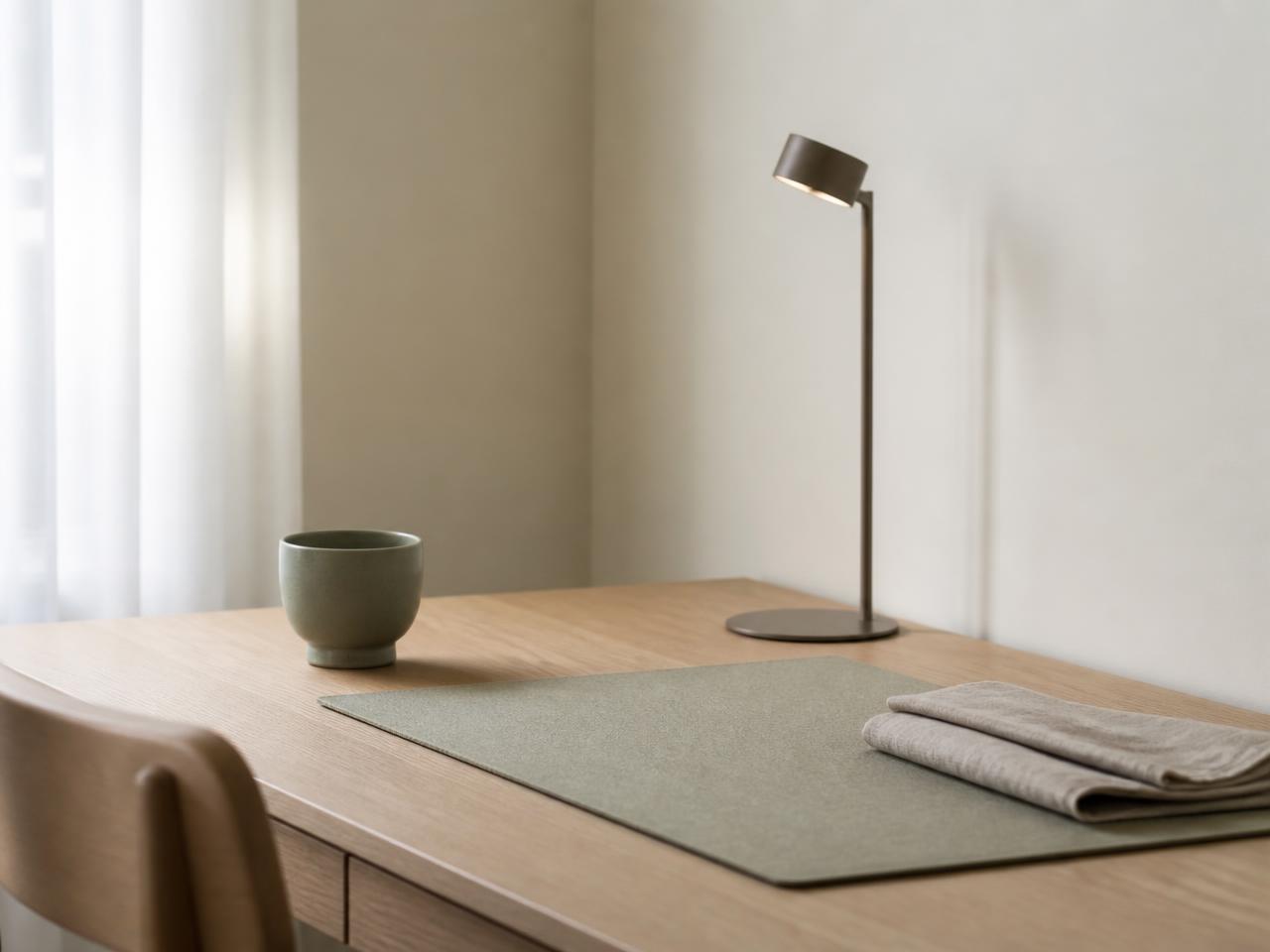
workspace · Low energy · Sensory high · $$ · 15 min build
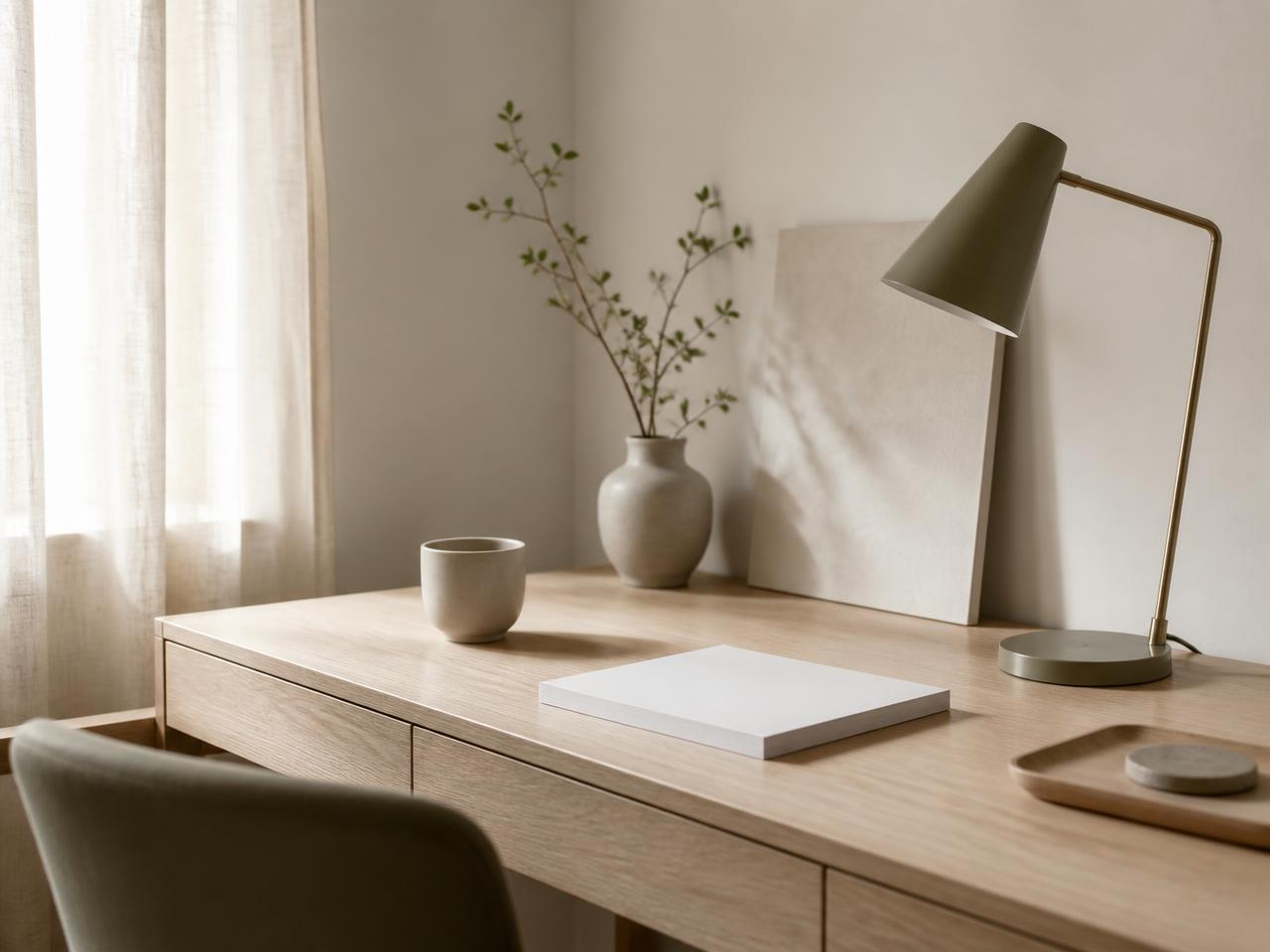
The Calm Corner Desk
A visually quiet desk with one lamp, one tray, one fidget — designed against sensory overload.
Brain science
Visual clutter steals working memory. By limiting surface objects to a count of five and using a single warm light source, you reduce orienting reflexes that hijack attention every few seconds.
15-minute build checklist
- Clear the desk completely — empty surface first.
- Place lamp at the back-left corner (or back-right if left-handed).
- Lay the mat. Add only: laptop, mug, one notebook.
- Drop the fidget where your non-dominant hand rests.
- Load drawer pods: cables, meds, snacks. Label each.
Shopping list
Warm 2700K desk lamp
Cuts overhead fluorescent overstimulation.
$48 · $$Linen desk mat
Soft border tells your brain ‘this is the zone’.
$32 · $Clear labeled drawer pods
Fights object permanence — see it, remember it.
$24 · $Silicone fidget ring
Body-doubling for your hands.
$12 · $
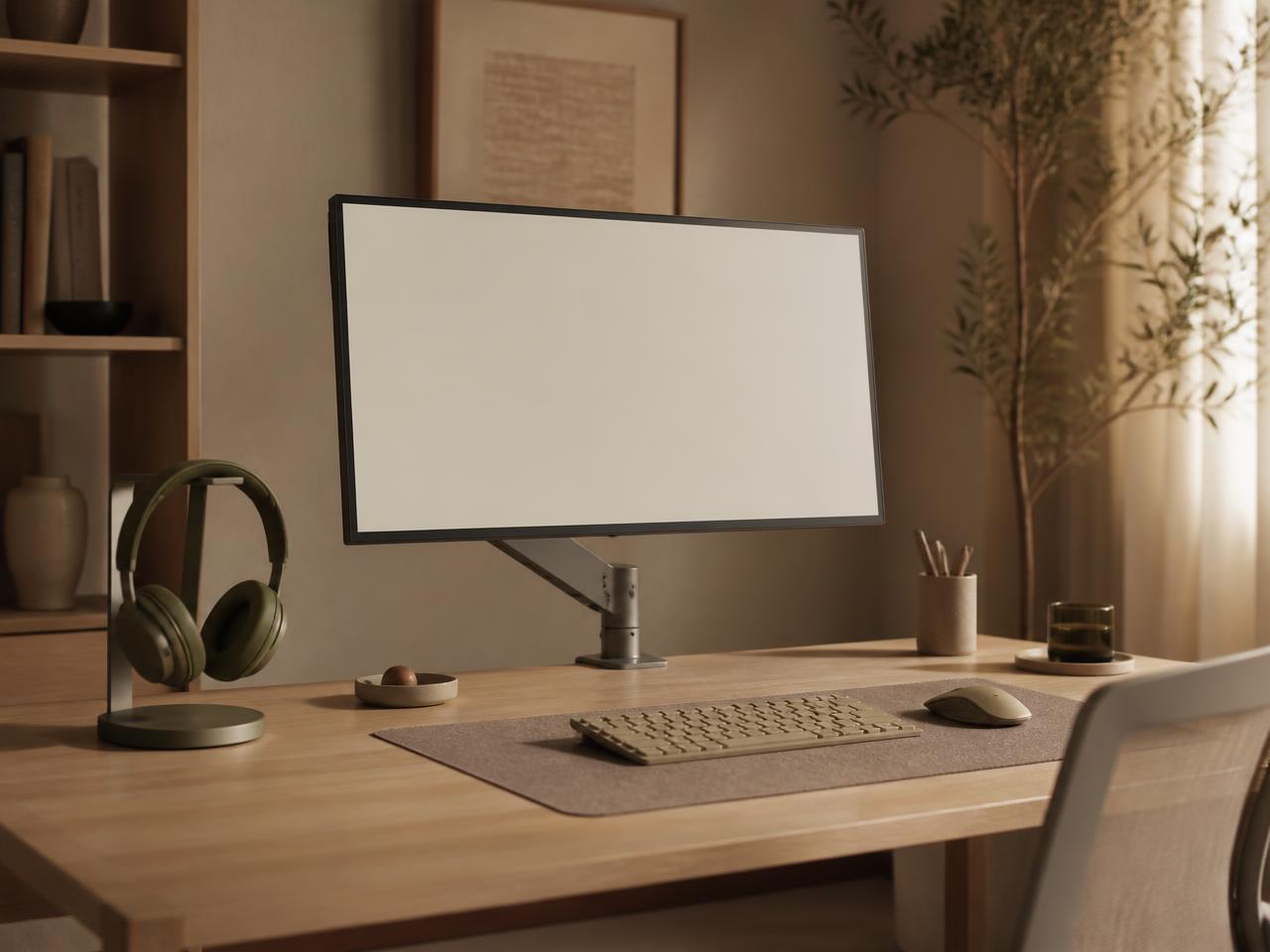
workspace · Hyperfocus · Sensory medium · $$$ · 90 min build
Hyperfocus Command Desk
Dual-monitor, cable-managed, ambient-lit station for deep-work sprints with built-in body-doubling cues.
Brain science
Bilateral visual symmetry plus a single ‘ritual object’ at center signals task-start to the basal ganglia, easing initiation.
15-minute build checklist
- Mount arms, level monitors to eye-height.
- Route all cables through tray; zip-tie in twos.
- Stick bias light to back of monitor.
- Place timer dead-center as the ‘start’ ritual object.
- Do a 25-min test session. Adjust lamp warmth.
Shopping list
Monitor arm (dual)
Frees surface, sets eye-line.
$140 · $$$Under-desk cable tray
Hides chaos — out of sight, out of loops.
$60 · $$Bias light strip
Reduces contrast fatigue.
$28 · $Pomodoro cube timer
Tactile start ritual.
$36 · $$
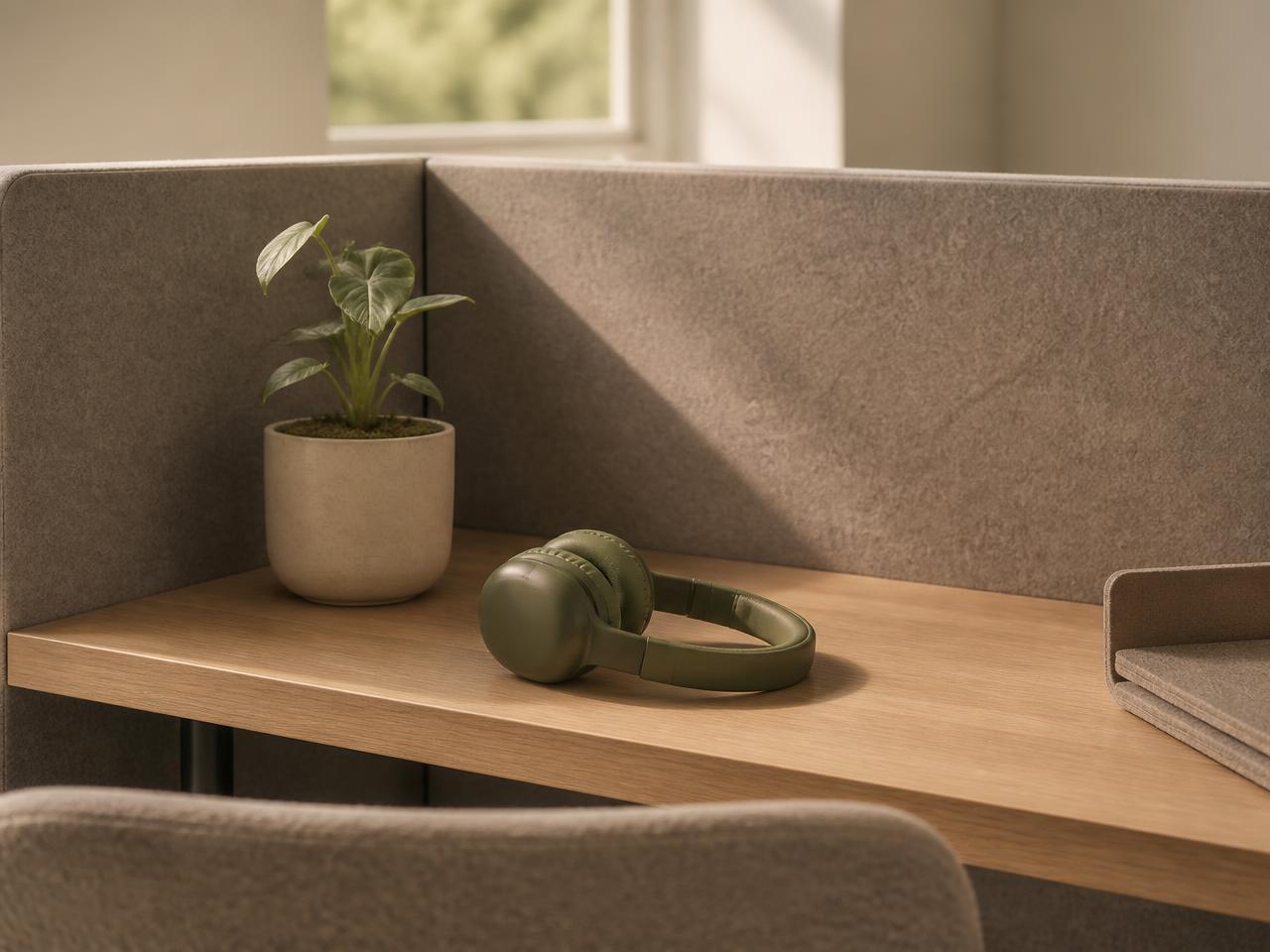
office · Low energy · Sensory high · $$ · 20 min build
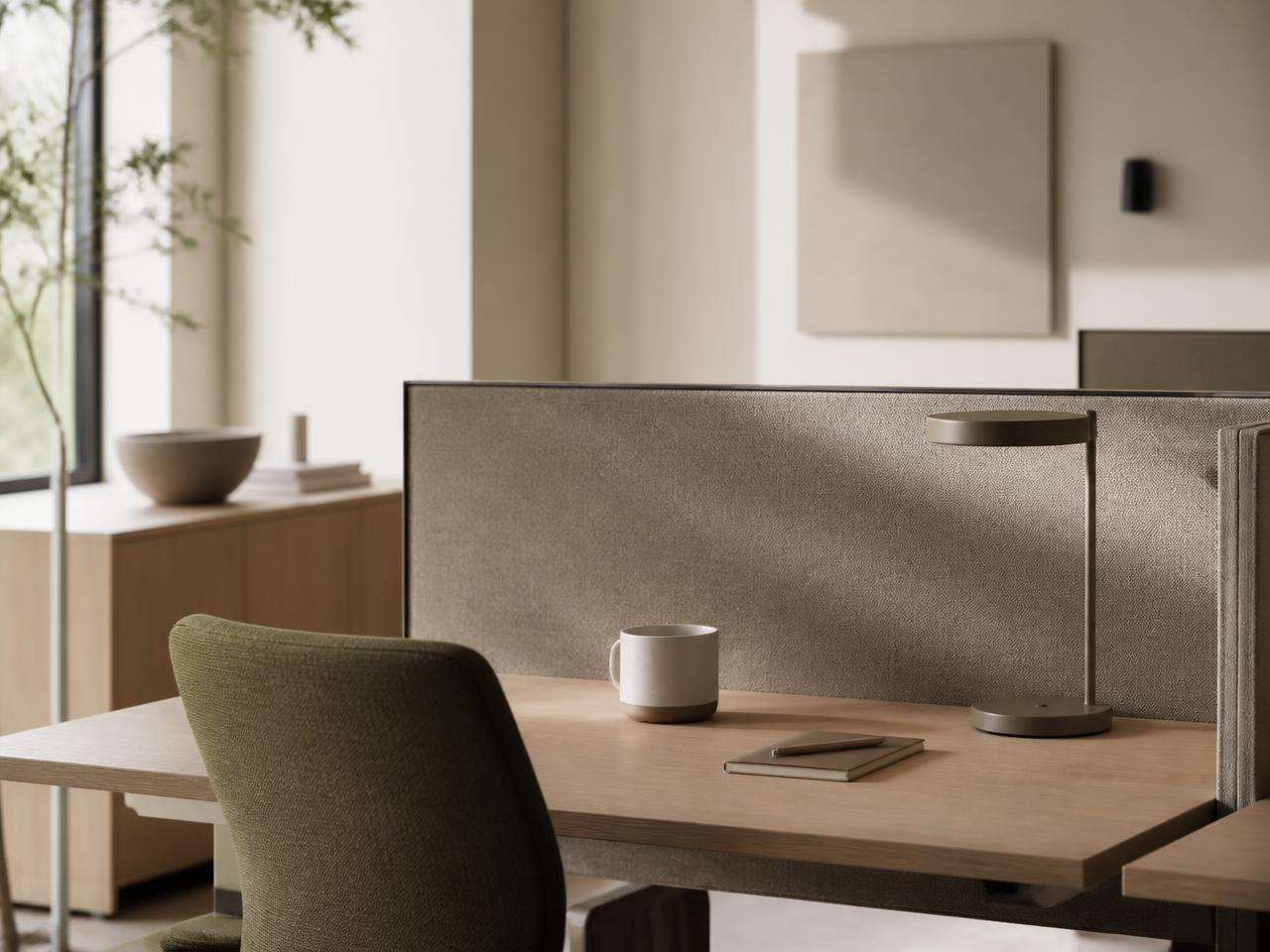
Cubicle Quiet Shield
A portable sensory shield for open-plan and shared offices — earplugs, warm lamp, and a visual privacy cue.
Brain science
Predictable auditory input reduces cortisol spikes. A visible ‘do not disturb’ signal offloads social monitoring from working memory.
15-minute build checklist
- Clip lamp to monitor, aim at wall — indirect only.
- Keep earplugs in a tin on the desk (visible = used).
- Prop the focus sign during 45-min blocks.
Shopping list
Loop-style filter earplugs
Softens noise, keeps voices audible.
$32 · $$USB warm clip lamp
Overrides overhead fluorescents.
$26 · $Small ‘in focus’ sign
Reduces interruptions without conflict.
$8 · $
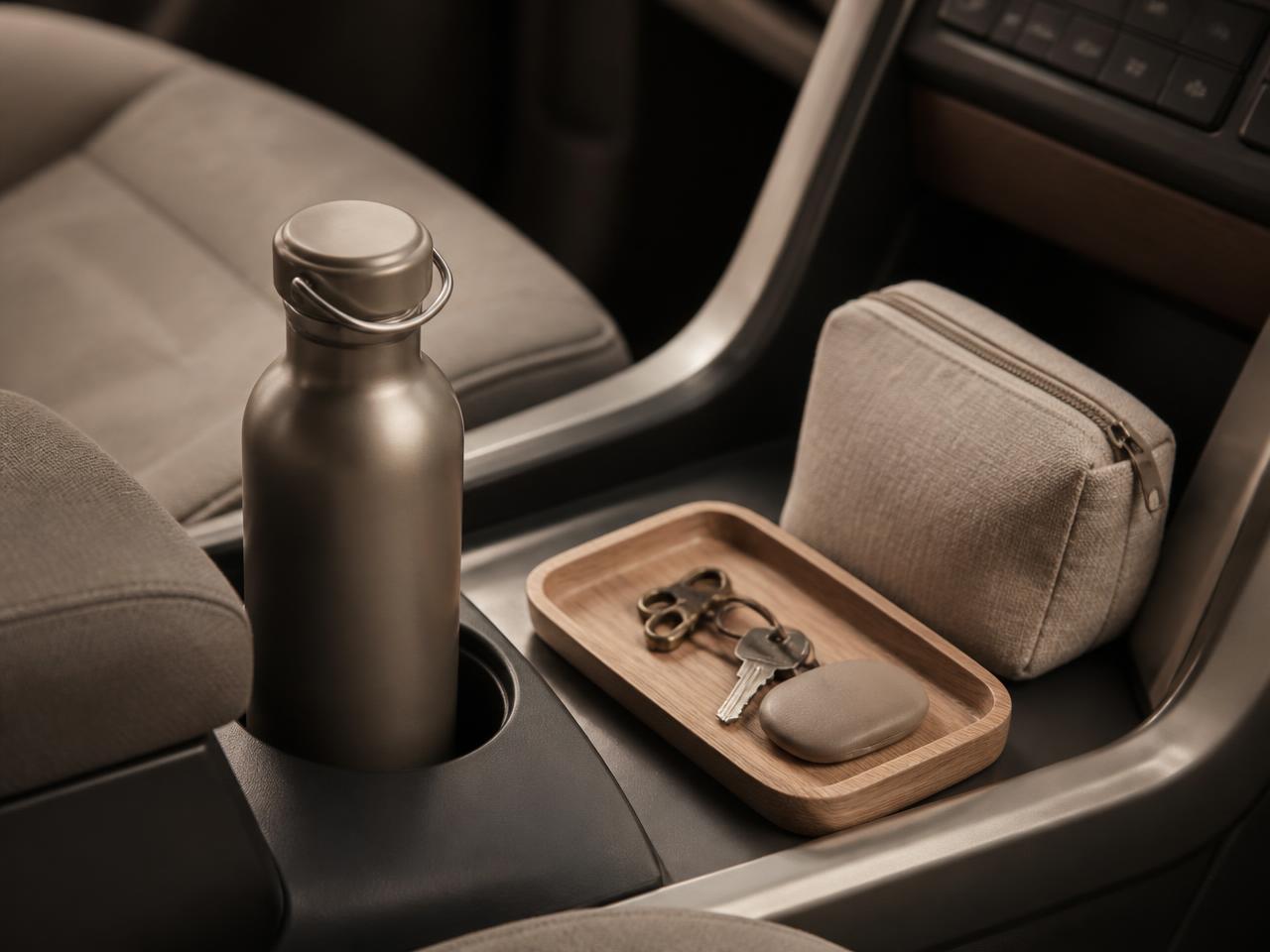
car · Low energy · Sensory medium · $ · 10 min build
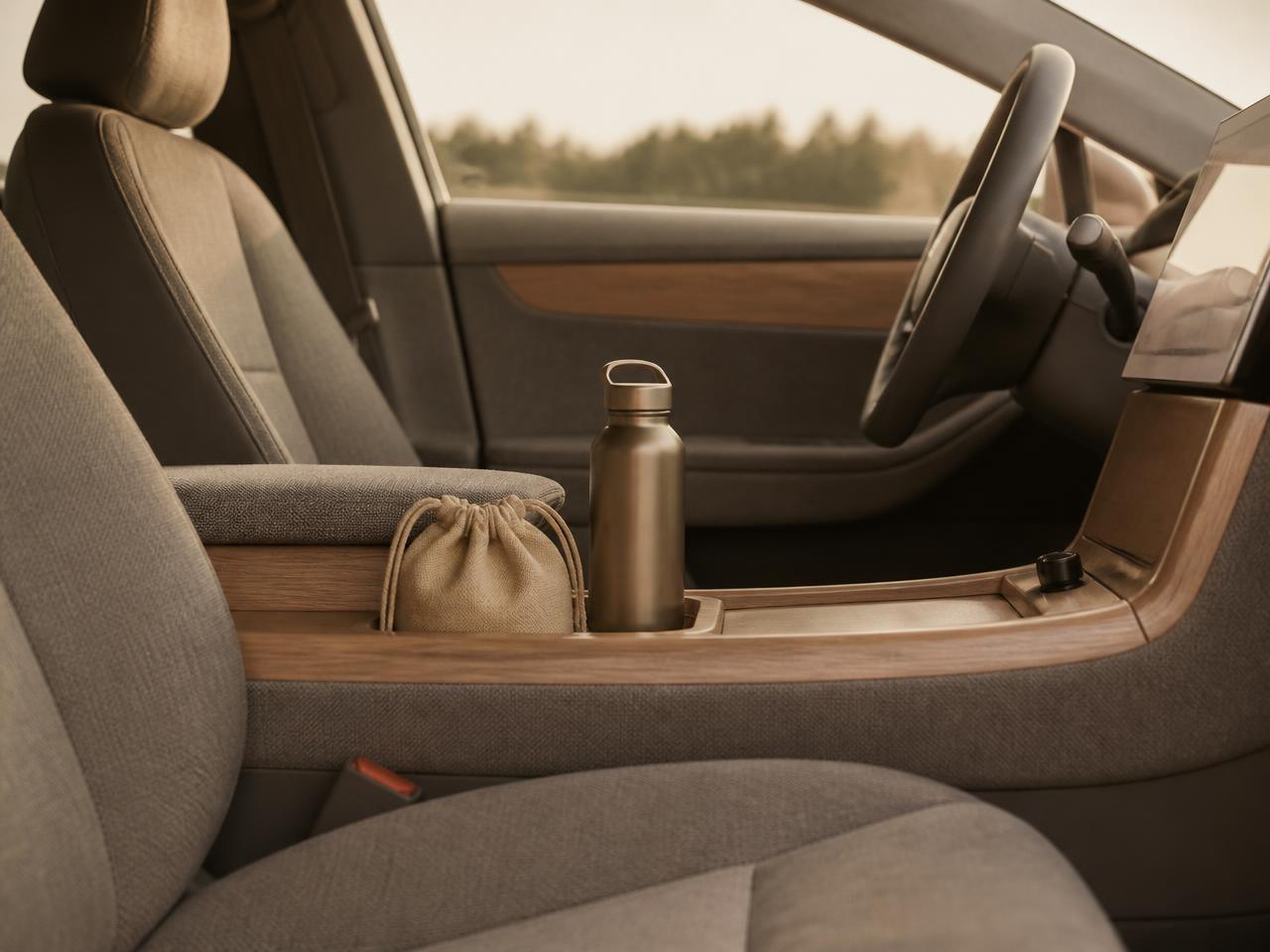
Console Reset Kit
Everything your past-self forgot, pre-staged in the center console. Five items, one tray, zero searching.
Brain science
Cars are high-stimulation, low-control environments. A fixed-position kit removes decisions during transitions — the hardest moments for ADHD brains.
15-minute build checklist
- Empty the console. Vacuum the crumbs.
- Drop in the felt organizer.
- Place: water, lip balm, hand cream, sunglasses, fidget.
- Take a photo of the layout — your future ‘reset’ reference.
Shopping list
Felt console organizer
Soft, non-rattling, holds shape.
$22 · $Refillable water bottle
Hydration = regulation.
$18 · $Lip balm + hand cream duo
Sensory grounding at red lights.
$14 · $Backup sunglasses
Light sensitivity buffer.
$20 · $
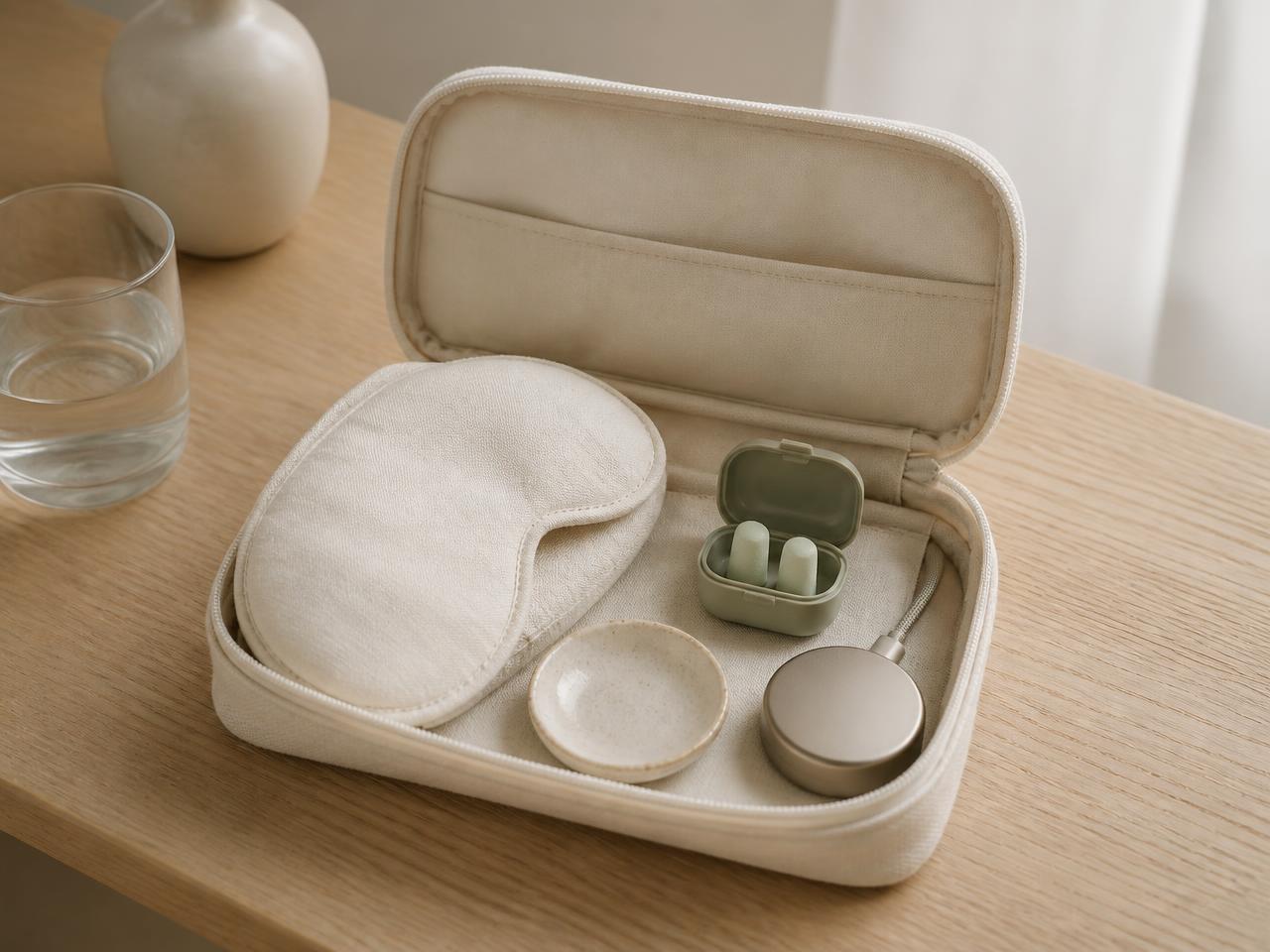
travel · Low energy · Sensory medium · $$ · 15 min build
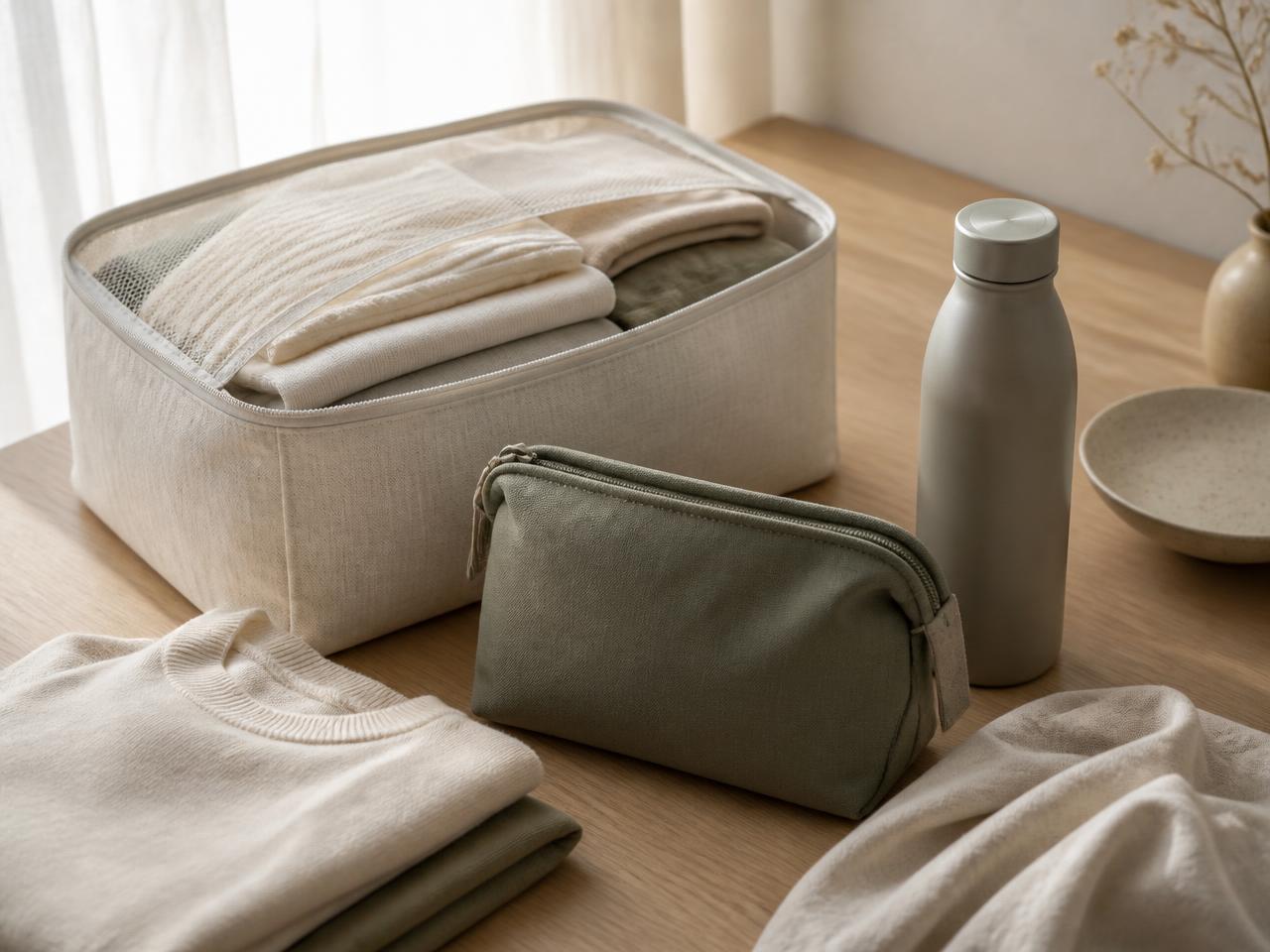
Trust-the-Pouch Travel Set
One pouch, labeled pods, repeatable system. Pack in 12 minutes without re-deciding anything.
Brain science
Each repeated decision draws on the same limited dopamine budget. Pre-bundling kills micro-decisions so executive function is preserved for the trip itself.
15-minute build checklist
- Fill pods once: skincare, meds, dental, charger, cables, snacks.
- Label every pod with a sharpie — words, not symbols.
- Photograph contents. Tape photo inside pouch.
- Re-stock after each trip — never unpack to zero.
Shopping list
Linen toiletry pouch
Soft surface, machine-washable.
$34 · $$Clear labeled pods (set of 6)
Object permanence solved.
$18 · $Noise-canceling earbuds
Sensory escape on demand.
$120 · $$$Melatonin tin
Reset sleep without rummaging.
$10 · $
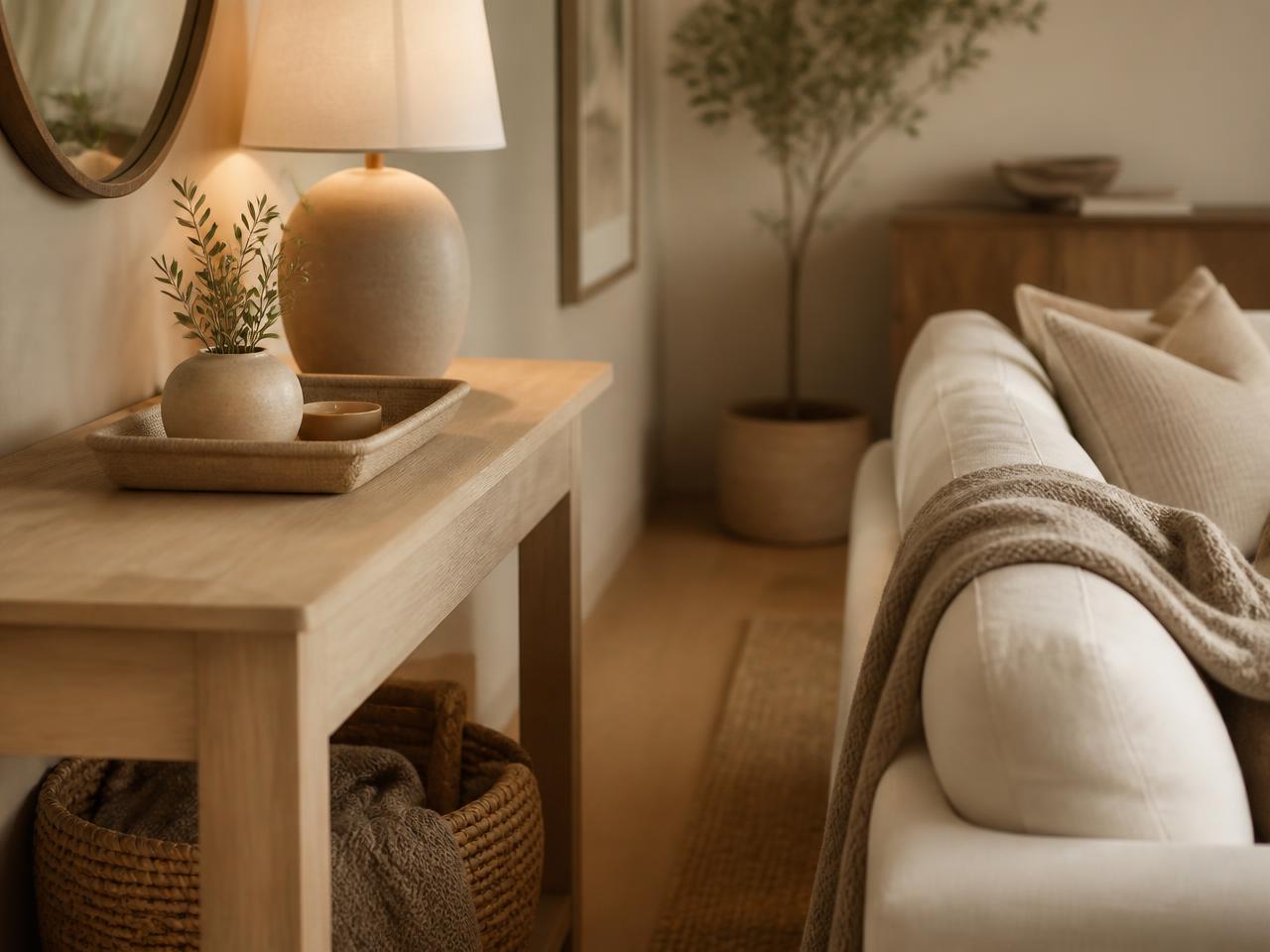
home · Low energy · Sensory high · $$ · 30 min build
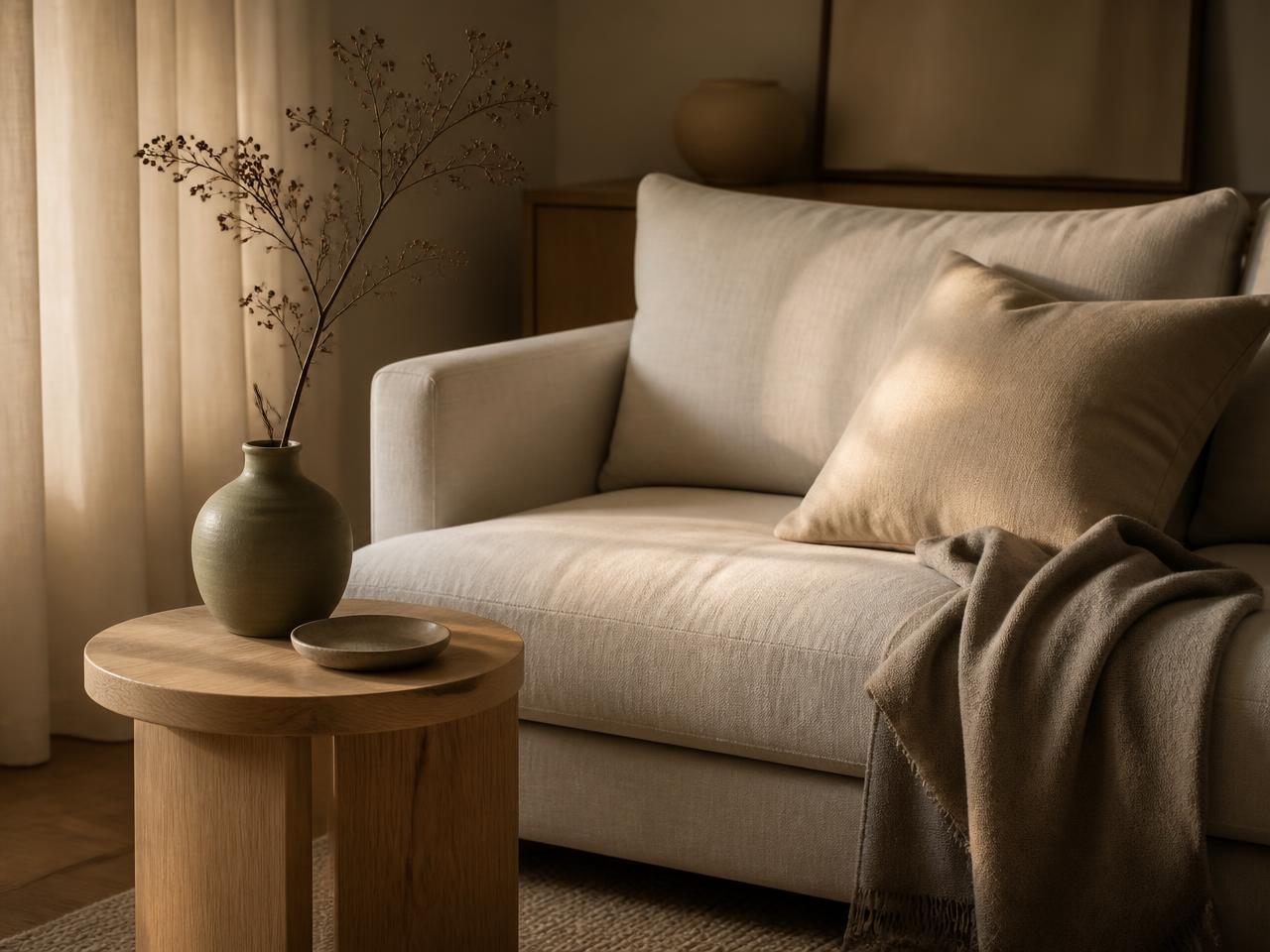
Soft-Landing Living Room
A post-6pm room with dim lamps, one grounding blanket, and a visible ‘drop zone’ for keys, wallet, phone.
Brain science
Warm, low-lumen lighting after sunset supports melatonin onset. A fixed drop-zone offloads short-term memory to the environment.
15-minute build checklist
- Turn off every overhead. Only lamps after 6pm.
- Drape the weighted throw on the couch corner you actually sit in.
- Mount the tray + hook within 6 feet of the front door.
- Practice the drop: keys → tray, every time, for 7 days.
Shopping list
Two 2700K table lamps
Kills overhead glare in one gesture.
$90 · $$Weighted throw (7lb)
Deep-pressure input calms the nervous system.
$70 · $$Entryway tray + hook
Keys, wallet, phone always in one place.
$28 · $
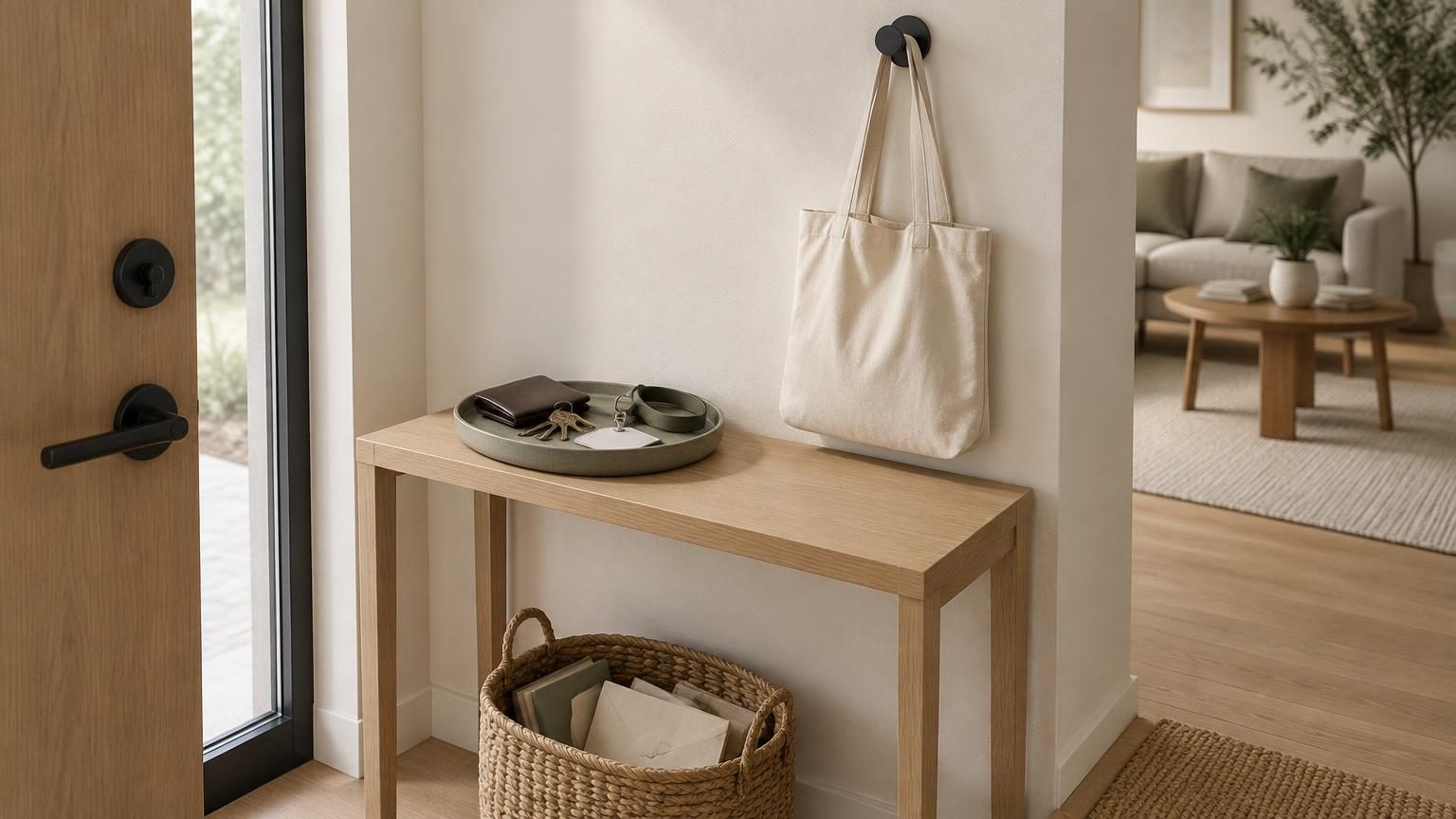
home · Low energy · Sensory low · $ · 15 min build
The Entryway Threshold Launch Pad
Stop relying on memory at the door for tasks your physical space can hold.
Brain science
Leaving the house is a demanding transition that leans on fragile prospective memory, so it's easy to forget essentials when late or stressed. Storing exit-critical items together in one zero-barrier launch pad at the point of performance turns a multi-location search into a single visual checkpoint. Open hooks and lidless trays keep stowing effortless even on low-energy arrivals home.
15-minute build checklist
- Clear 2 square feet of space directly beside the door you actually use. (2 minutes.) Pick the exact threshold you pass through every day, not a formal front entryway you rarely touch.
- Place one open, lidless catch bowl or tray on that surface. (1 minute.) Set it at natural hand height so keys, wallet, badge, and small daily carry drop into one bounded spot upon arrival.
- Mount one heavy-duty wall hook or over-the-door hook directly above or beside the tray. (5 minutes.) Position at arm's reach so your primary bag, outerwear, or keys hang with a single motion — no closet doors or hangers.
- Set one open “Take Tomorrow” basket on the floor or lower shelf directly below. (3 minutes.) An open, lidless bin for outgoing mail, library books, or next-morning items, sitting directly in your exit path.
Shopping list
Open catch bowl or shallow tray
Removes multi-step drawer friction so daily carry drops into a single visible destination on arrival.
$6 · $Heavy-duty wall or over-the-door hook
Replaces high-friction hangers with a single gross-motor hanging motion for bags and coats.
$9 · $Open floor basket
Captures outgoing items in your visual line-of-sight with no sorting or lids.
$10 · $
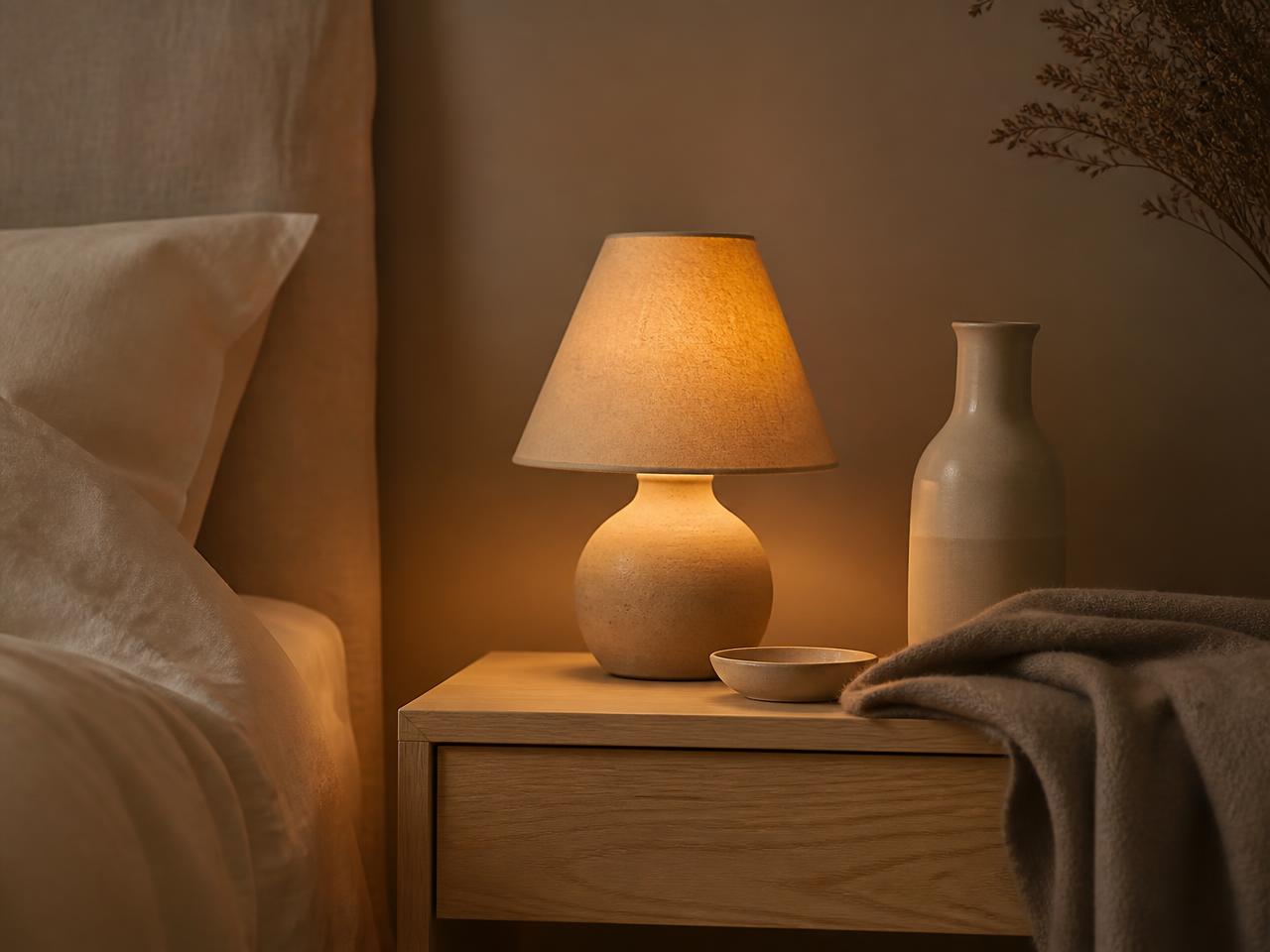
bedroom · Low energy · Sensory high · $ · 15 min build
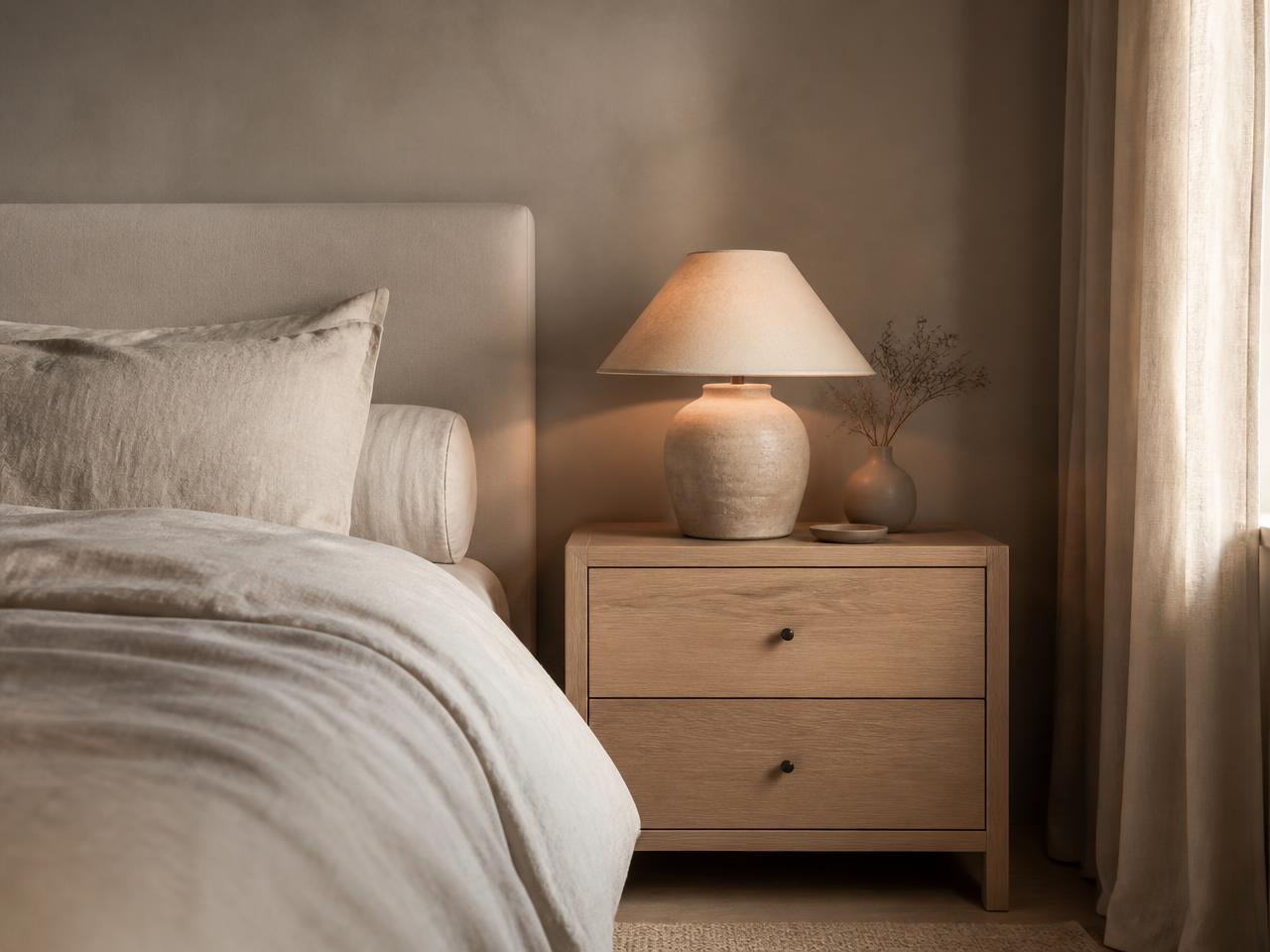
Wind-Down Bedroom
A pre-sleep runway: amber lamp, phone dock outside the bed, one book, one glass of water.
Brain science
Physical distance from the phone reduces bedtime revenge scrolling. Consistent pre-sleep cues train sleep-onset via classical conditioning.
15-minute build checklist
- Move the phone dock to the far wall tonight.
- Swap the bedside bulb to amber.
- Put one book + water glass on the nightstand — nothing else.
- Set a ‘dim the lamps’ alarm 45 min before bed.
Shopping list
Amber bedside lamp
Blue-light free = melatonin-friendly.
$38 · $$Phone dock (across the room)
Distance beats willpower.
$18 · $Silk eye mask
Signals ‘eyes off’ to the nervous system.
$22 · $
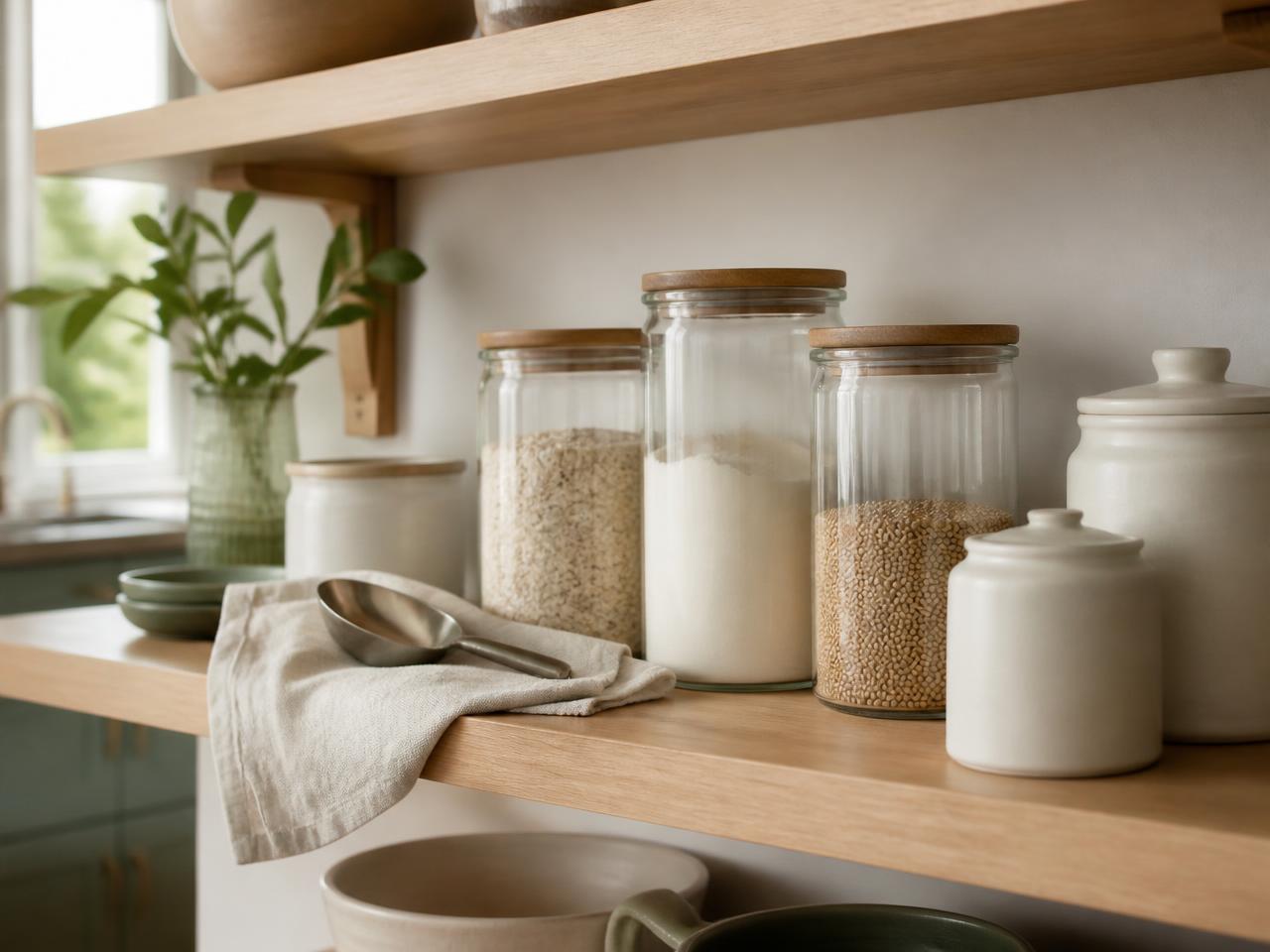
kitchen · Hyperfocus · Sensory medium · $$ · 60 min build
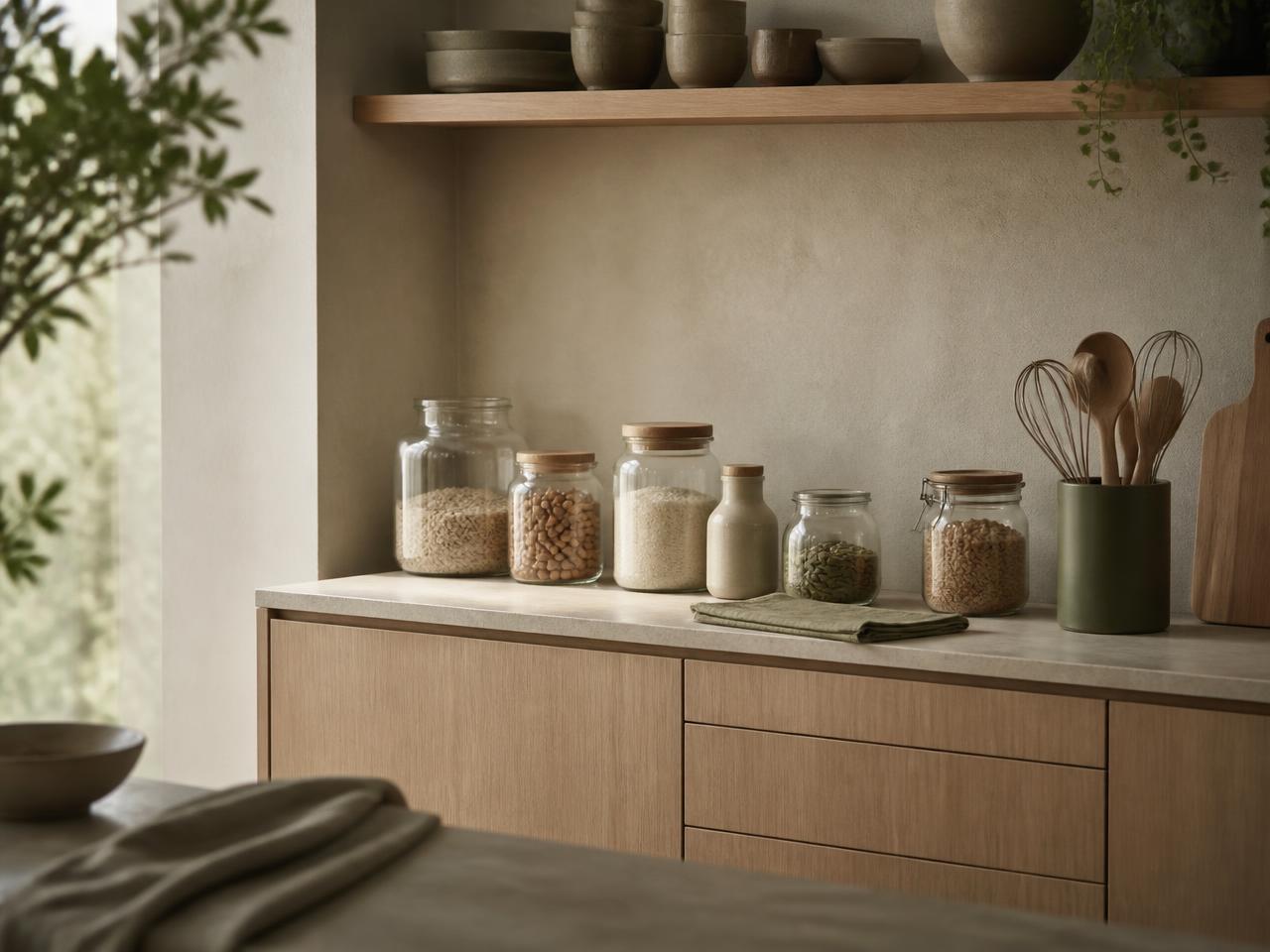
Visible Kitchen Reset
Clear bins, labeled shelves, one ‘today’ tray — food you can see is food you’ll eat.
Brain science
‘Out of sight, out of mind’ is literal for ADHD brains. Transparent storage plus labels re-enables object permanence for food.
15-minute build checklist
- Empty the fridge shelf-by-shelf. Toss expired.
- Group by meal (breakfast / snack / lunch / dinner) into bins.
- Label every bin and pantry shelf.
- Each morning, load the ‘today’ tray with what you plan to eat.
Shopping list
Clear fridge bins (set of 4)
See it → eat it before it spoils.
$36 · $$Chalkboard shelf labels
Rewritable = low-friction to keep up.
$14 · $‘Today’ counter tray
One tray = today’s meals staged.
$24 · $
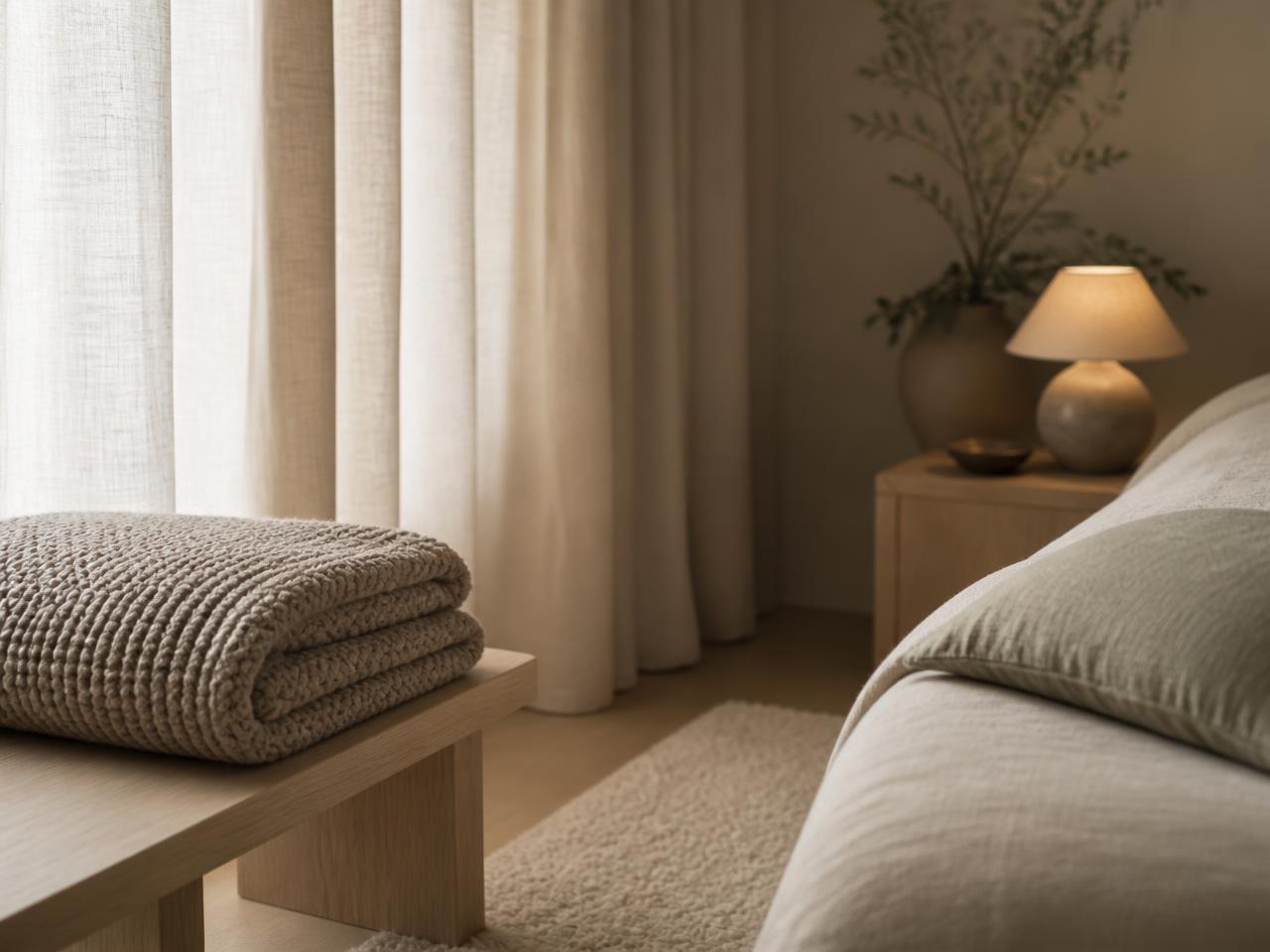
bedroom · Low energy · Sensory high · $$ · 120 min build
The Sensory Sanctuary Bedroom
One continuous wall colour, 2700K amber after dark, weight on the body, and zero work visible from the bed.
Brain science
Sleep problems are commonly reported among ADHD and autistic adults. Two things seem to help: reducing what the brain has to process, and being consistent about it. Sharp contrast boundaries — a white ceiling against a dark wall, a bright doorway — give the visual system edges to keep re-scanning. Painting walls, ceiling and trim in one continuous hue removes those edges. Warm, low-lumen light in the evening supports the body's own wind-down signals, and research suggests deep-pressure input from a weighted blanket helps some people settle. None of this is a cure for insomnia — it's about lowering the room's demand on you.
15-minute build checklist
- Stand in the doorway. Photograph the room. Note every work object visible from the pillow — remove all of them tonight.
- Swap the bedside bulb to 2700K. Overheads stay off after dark.
- Hang blackout panels. Check for light spill at the edges.
- Pick one hue. Paint walls, ceiling and trim the same colour — no feature wall.
- Add the weighted blanket. Give it a week before deciding.
- Set the sunset routine (or a phone alarm) 45 minutes before bed.
Shopping list
Move every work object out of eye-line from the bed
Free. The single highest-impact change in this setup — visible work is an open loop.
$0 · $2700K warm-white LED bulb
Cheapest possible circadian fix. Amber-warm, not daylight.
$9 · $Blackout curtain panels
Total darkness capability. Street-light spill is a sensory input you can't habituate to.
$35 · $Loop Quiet earplugs
Soft silicone for side-sleeping. Loop rates the range at roughly 16–27 dB depending on model.
$25 · $Weighted blanket (5–10% of body weight)
Deep-pressure input; the usual rule of thumb is 5–10% of your weight.
$70–$250 · $$Colour-drench paint (walls + ceiling + trim, one hue)
Removes contrast boundaries. Muted sage, warm grey-blue, soft clay, or dusty lavender.
$120 · $$Hatch Restore sunrise/sunset lamp
Automates the amber wind-down so you don't have to remember it.
$170–$200 · $$$Motion-isolating mattress
For co-sleepers: partner movement is a sensory intrusion, not a minor annoyance.
$800+ · $$$
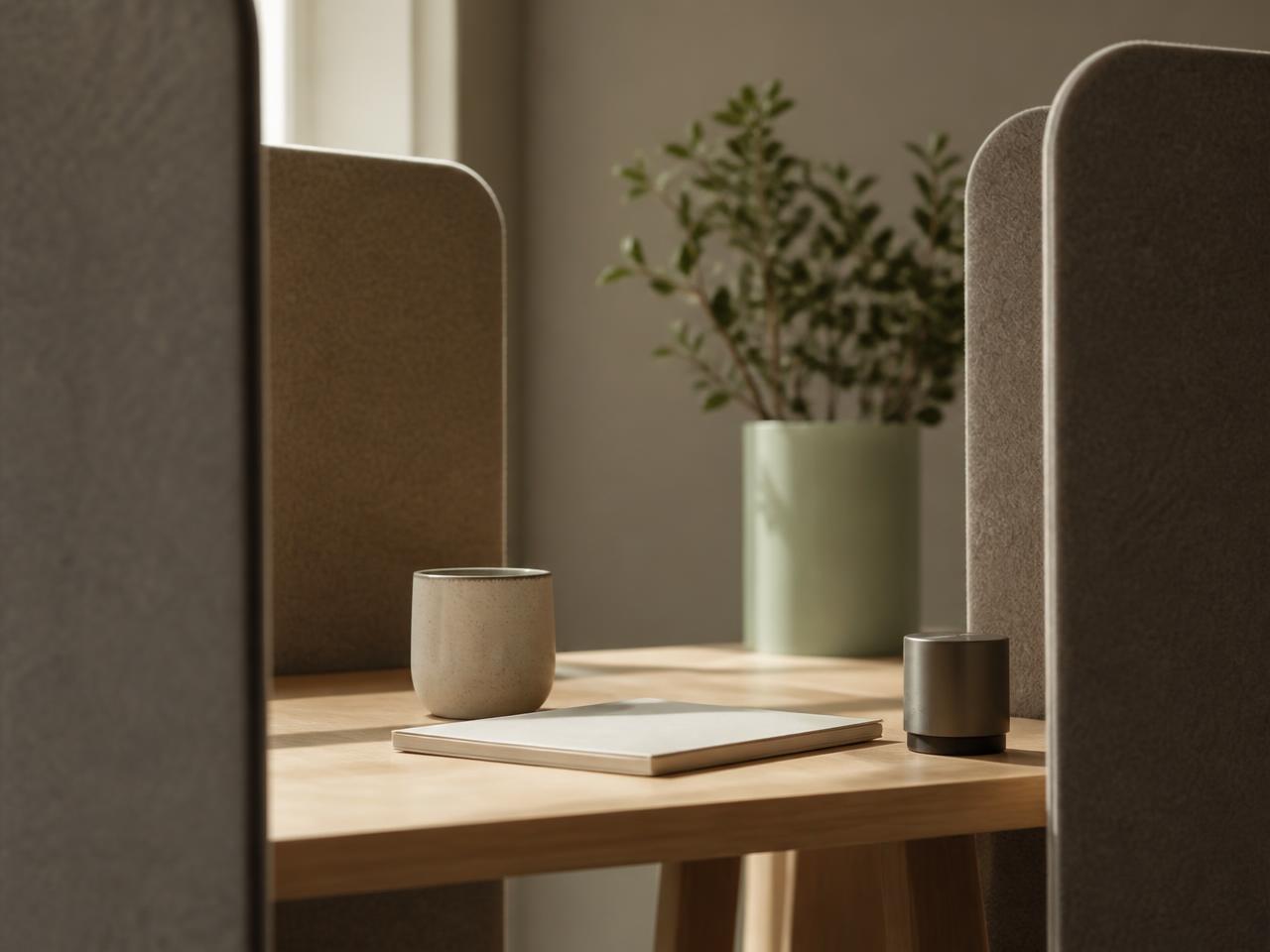
workspace · Hyperfocus · Sensory high · $$ · 45 min build
The Attention Tunnel Desk
Desk faces a calm wall, ears are filtered, light is 3000K, and one tray holds everything active. Built to protect focus, not just start it.
Brain science
Deep focus tends to be all-or-nothing: attention narrows into one intense channel, and an unexpected noise or movement doesn't just distract it — it collapses it. Rebuilding that state costs real energy, which is part of why a day of small interruptions feels more exhausting than a day of hard work. Research suggests differences in how the ADHD brain filters irrelevant input, so ambient noise and peripheral movement compete for attention more than they would otherwise. The design goal isn't a quiet room; it's a predictable one.
15-minute build checklist
- Rotate the desk to face a wall. Do this before buying anything.
- Kill the overhead. One lamp, 3000K, aimed at the wall not your face.
- Put the Launch Pad tray at your dominant hand. Only today's active items go in it.
- Route cables into the channel. Nothing loose on the floor.
- Keep earplugs visible on the desk — stored means unused.
- Set up one Locked Mode blocking session and run it once before judging it.
Shopping list
Turn the desk to face a wall, not a doorway or walkway
Free. Removes the peripheral movement your brain keeps checking.
$0 · $Switch off the overhead, use one lamp
Free if you already own a lamp. Overhead glare is the most common unnoticed drain.
$0 · $Loop Engage earplugs
Filters ambient noise while keeping speech audible — for offices where you still need to hear people.
$35 · $One 'Launch Pad' tray
Everything active lives here. One motion in, one motion out — no lids, no drawers.
$25 · $Under-desk cable channel
Cables are visual noise that never stops being processed.
$30 · $3000K warm task lamp
Replaces harsh overheads; reduces the eye strain that ends sessions early.
$45 · $$Freedom (website & app blocker)
Externalises the boundary so willpower isn't the mechanism. Locked Mode is the part that matters.
~$40/yr · $$Wobble stool or active-sitting chair
Micro-movement for the under-stimulated end of the dial — an alternative to fidgeting with your phone.
$90–$200 · $$$Acoustic wall panels
Structural dampening rather than masking. Meaningful reductions in ambient noise without wearing anything.
$120+ · $$$
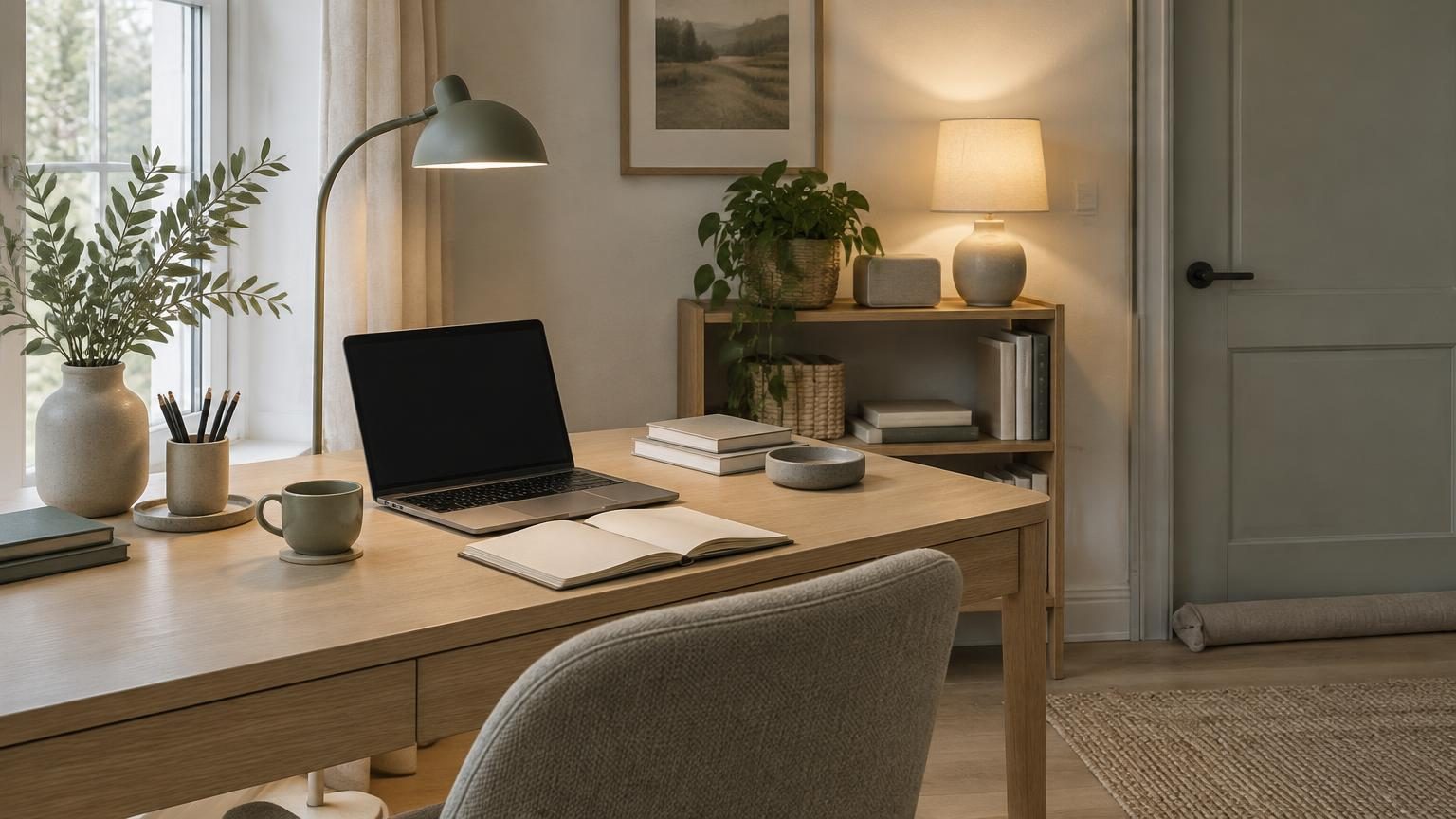
workspace · Low energy · Sensory high · $ · 15 min build
The Sensory-Tuned Focus Station
Layered acoustic masking and indirect, flicker-free lighting to help protect working memory and ease sensory fatigue.
Brain science
Unpredictable background speech can compete for working memory, while direct glare and light flicker can accelerate visual and cognitive fatigue. Steady, continuous pink or white noise can bury disruptive speech patterns and lower their intelligibility — creating an open-air acoustic boundary without the pressure or isolation of tight earplugs. Indirect bounce lighting and shielded task lamps can reduce eye strain and screen glare, giving your focus a predictable baseline to rest on.
15-minute build checklist
- Kill the ‘big light’ and switch to warm, indirect side lighting. (2 minutes.) Turn off unshielded overhead lights or fluorescents; turn on a shielded lamp angled toward a nearby wall so light bounces softly into the room with no direct bulb glare.
- Position a shielded task lamp above and slightly behind your work area. (3 minutes.) Aim the beam downward onto papers or desk surface, keeping the bulb hidden from your eyes and angled away from your screen to kill reflections.
- Set up an open-air acoustic masking speaker or fan nearby. (5 minutes.) Place a small speaker or mechanical fan playing continuous, steady pink or white noise at a moderate, comfortable volume to raise the ambient acoustic floor.
- Seal the undercut beneath your room door. (5 minutes.) Slide a fabric draft stopper or threshold sweep under the door to block the air gap where background speech and hallway noise leak in.
Shopping list
Shaded or indirect table lamp
Can reduce direct bulb glare and harsh overhead flicker by bouncing soft, diffused light off walls.
$10 · $Positionable task lamp
Focuses light onto physical work surfaces without bouncing off screens or shining into eyes.
$12 · $Broadband noise generator or fan
Raises the ambient acoustic floor with continuous pink or white noise, making background speech less intelligible and less distracting.
$15 · $Door threshold excluder or sweep
Helps block sound leakage through the air gap under the door, so fewer airborne voices reach the focus zone.
$8 · $
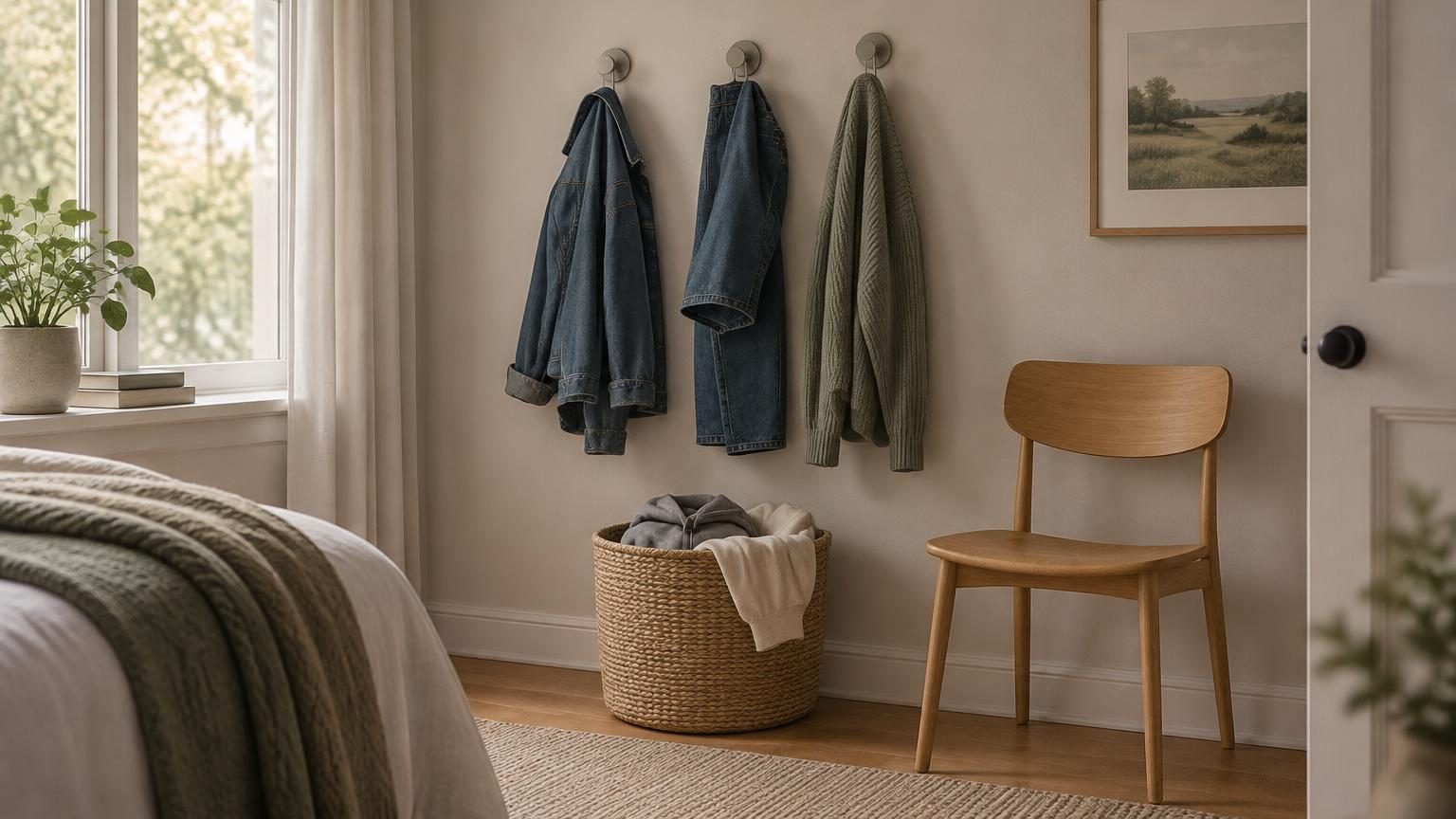
bedroom · Low energy · Sensory low · $ · 10 min build
The Bedroom "Rewear" Station
Give lightly worn clothes a dedicated home before they turn into a laundry chair pile.
Brain science
The “laundry chair” can form because standard closets ignore a necessary third clothing category: worn once, not dirty, not clean. Open, lidless baskets and single-motion wall hooks create a zero-effort landing pad exactly where undressing happens. Broad categories plus defined boundaries help contain the visual clutter while keeping items visible for working memory, so postponed decisions pile up less.
15-minute build checklist
- Clear the laundry chair completely. (3 minutes.) Move dirty items straight to the hamper and fully clean clothes back to drawers or closet so the chair resets to zero.
- Mount a row of 3 wall hooks or an over-the-door hook rail right where you naturally undress. (3 minutes.) Position hooks at natural arm height so hanging a jacket, jeans, or sweater takes a single gross-motor motion — no hangers to navigate.
- Set one open, lidless “rewear” basket on the floor directly beneath the hooks. (2 minutes.) A soft, open basket catches loungewear or hoodies that don't need hanging, contained with no folding.
- Establish a simple 48-hour reset boundary. (1 minute.) Anything still in the rewear basket or on the hooks after two days goes straight into the laundry hamper at your next quick reset.
Shopping list
Over-the-door or wall-mounted hook rail
Removes hanger, closet door, and folding friction, turning clothing stowage into a single gross-motor hanging motion.
$12 · $Open, lidless rewear basket
Eliminates lid, latch, and sorting steps so lightly worn garments land inside a defined boundary without effort.
$14 · $
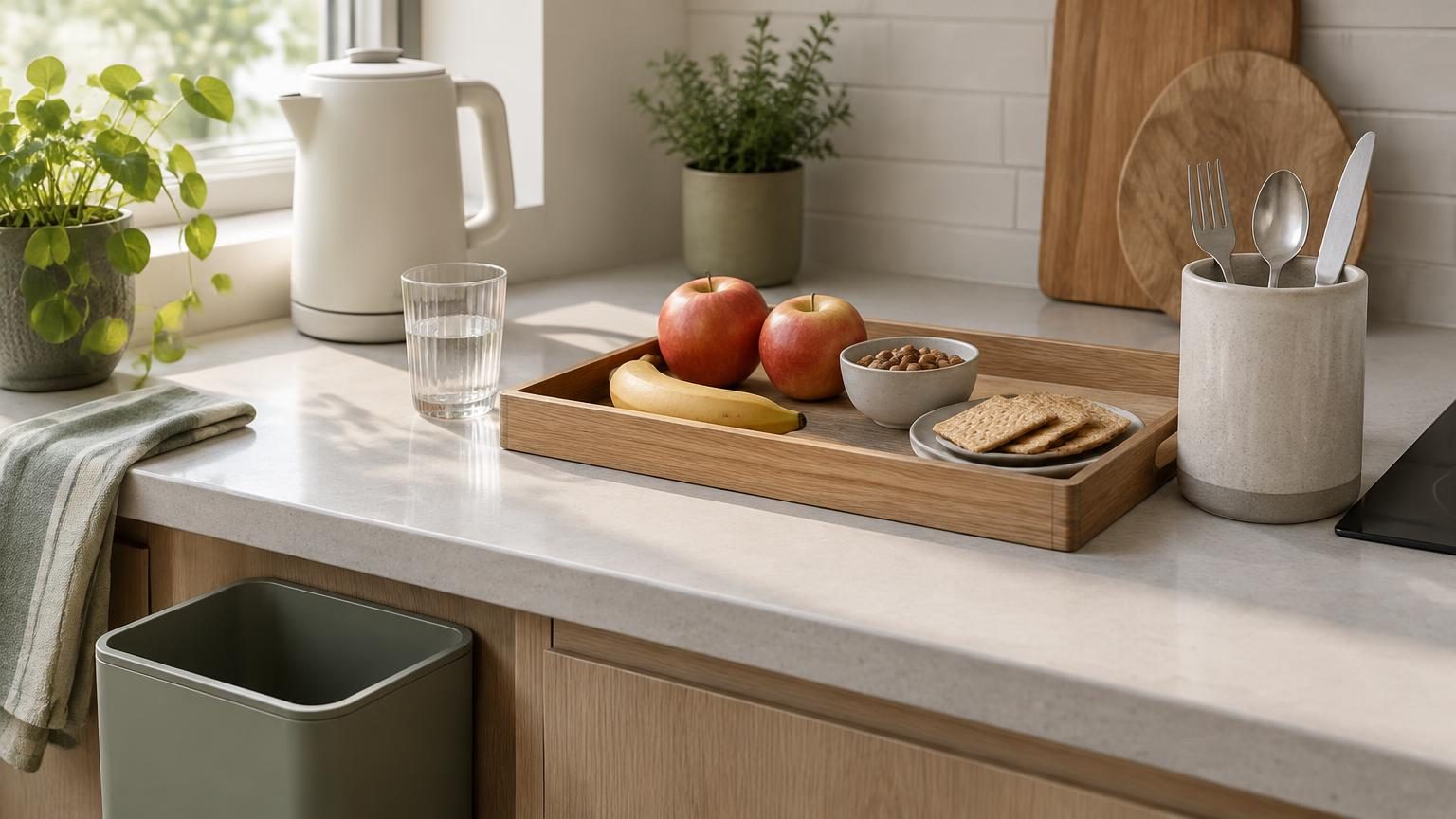
kitchen · Low energy · Sensory low · $ · 10 min build
The Low-Energy "Feed Myself" Kitchen Station
A zero-friction, one-step food setup for days when executive fatigue makes meal decisions feel impossible.
Brain science
On severe-fatigue days, multi-step routines — cabinet doors, deep drawers, complex sorting — can become friction thresholds that make starting a task much harder. Stationing zero-prep food and duplicate tools directly at their point of use lowers perceived effort and cuts out multi-step retrieval. Open, lidless bins can give working memory instant visual cues, so you can feed yourself with minimal physical and mental effort on your lowest-capacity days.
15-minute build checklist
- Clear 1 foot of eye-level space on your primary kitchen counter or open shelf. (3 minutes.) Pick the exact spot beside where you pour water or make hot drinks, directly in your line of sight.
- Set one open, lidless tray or shallow box directly on that cleared spot. (2 minutes.) Fill it exclusively with zero-prep, high-utility foods, protein options, and simple snacks — visible nourishment with no doors or lids.
- Place a heavy open mug or crock right beside the tray to hold 2–3 essential utensils. (2 minutes.) Station your daily fork, spoon, and butter knife in the open to bypass drawer-opening and micro-sorting friction.
- Position a small, open-top waste bin on the floor or counter right beneath this station. (3 minutes.) Within arm's reach, so wrappers and food waste drop away in a single motion — no under-sink cabinets.
Shopping list
Open lidless counter tray or shallow bin
Removes cabinet door, unlatching, and search steps so zero-prep food stays visible and accessible in a single motion.
$10 · $Heavy open mug or countertop crock
Keeps daily utensils instantly reachable at the point of performance, bypassing drawer dividers and sorting.
$10 · $Open-top waste bin
Eliminates under-sink doors and foot-pedal steps so waste is discarded immediately without breaking momentum.
$12 · $